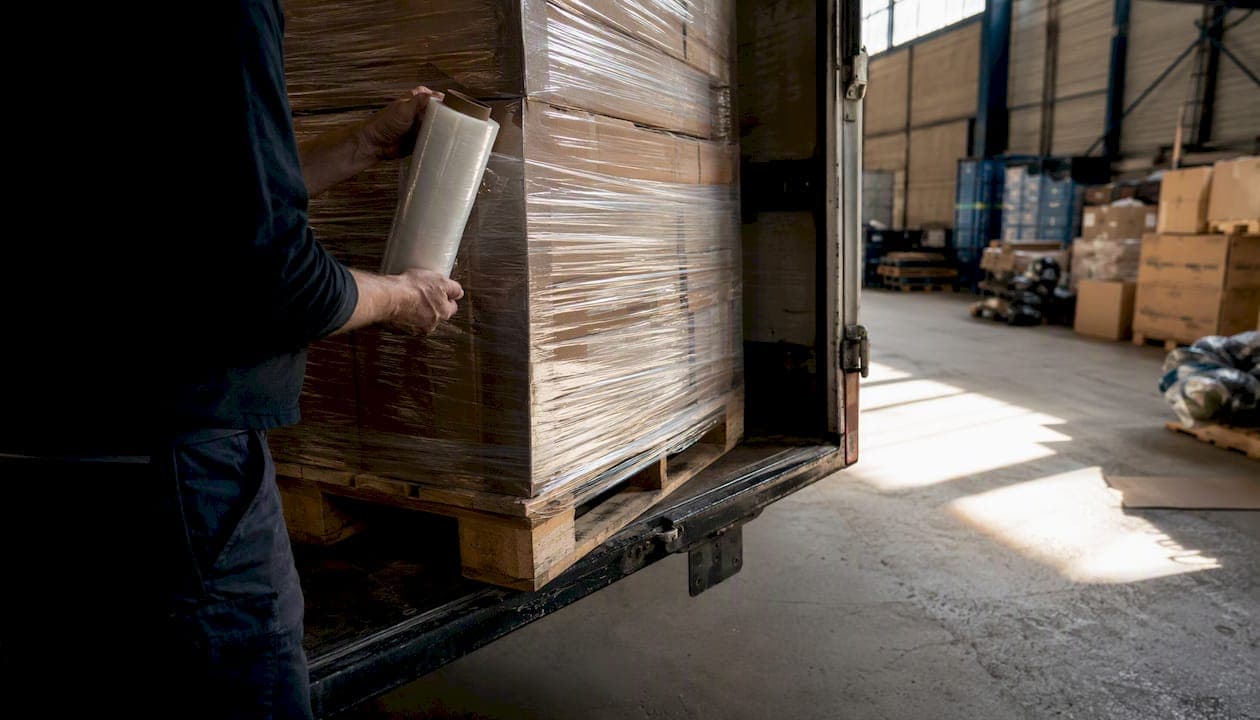
A standard single-pallet delivery within the UK typically falls between £30 and £130, depending on distance and service tier. Short-haul economy shipments on a standard 1200×800mm pallet typically cost in a lower to mid price range. Mid-range distances increase the cost, and long-haul lanes cost more for economy service. Express or next-day freight adds a meaningful premium on top of those bands.
Three surcharges most commonly blow past those headline figures:
- Residential delivery: carriers charge extra when there's no loading dock, often £10–£25 on top of the base rate.
- Tail-lift/liftgate: required when the delivery address has no forklift or dock, typically adding an extra fee per movement.
- Oversize or overweight: pallets exceeding standard dimensions or weight limits (usually 1,000 kg for a full pallet) attract a surcharge that can rival the base rate itself.
Pro Tip: Before you accept any quote, ask whether the price shown is all-in or base-only. A £40 headline rate with a £25 residential fee and a £20 tail-lift charge is actually an £85 shipment.
For an exact figure on your specific load, get an instant quote through Swiftroute-courier and compare multiple approved carriers at once.
Key Takeaways
UK pallet delivery costs range from roughly £30 to £130 for a standard full pallet, but residential, tail-lift, and fuel surcharges routinely add £25–£55 to that base, making itemized quotes the only reliable way to compare carriers.
| Point | Details |
|---|---|
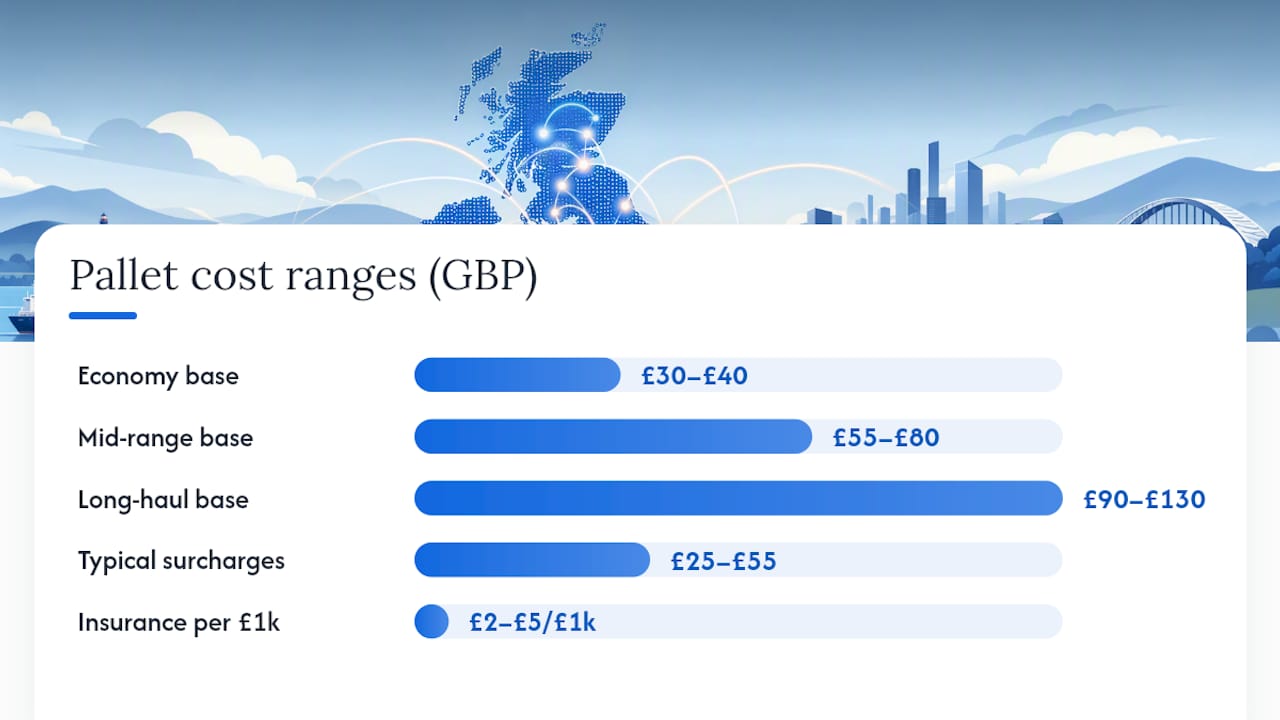
| Standard price bands | Economy single-pallet rates run £30–£40 short-haul, £55–£80 mid-range, and £90–£130 long-haul. |
| Surcharges change the total | Residential, tail-lift, and fuel surcharges (10–20% of base) can add £25–£55 or more to any quote. |
| Declared-value insurance | Cover typically costs £2–£5 per £1,000 declared; recommended for fragile or high-value loads. |
| Reduce cost before booking | Batching pallets, using a business delivery address, and booking off-peak are the highest-impact savings. |
| Swiftroute-courier | Returns itemized, comparable quotes from approved UK carriers in one form, with no monthly fees. |
Table of Contents
- What does pallet delivery cost by size and weight?
- How do couriers calculate your pallet delivery price?
- How do you get an accurate instant quote for pallet delivery?
- What transit times should you expect for pallet delivery in the UK?
- What does pallet delivery insurance cost and how do claims work?
- What can you actually send on a pallet, and what's restricted?
- How can you reduce your pallet delivery costs?
- How does a transport marketplace make pallet pricing faster and more comparable?
- When does a marketplace-first approach actually make sense?
- Swiftroute-courier: compare UK pallet quotes without the back-and-forth
- Sources
What does pallet delivery cost by size and weight?
UK carriers price pallets across four standard size categories. Understanding which category your load falls into is the fastest way to narrow down your freight delivery costs before you even pick up the phone.
Standard UK pallet size categories:
- Quarter pallet: up to 600×400mm footprint, typically up to 250 kg
- Half pallet: 600×800mm, typically up to 500 kg
- Full pallet (Euro): 1200×800mm, typically up to 1,000 kg
- Full pallet (UK/GMA): 1200×1000mm, typically up to 1,000–1,200 kg
The table below shows illustrative price bands for economy and standard service tiers across three distance brackets. These are market benchmarks, not guaranteed quotes.
| Pallet type | Short-haul (<50 mi) Economy | Mid-range (50–100 mi) Standard | Long-haul (>100 mi) Standard |
|---|---|---|---|
| Quarter pallet (up to 250 kg) | £20–£30 | £30–£50 | £50–75 |
| Half pallet (up to 500 kg) | £25–£40 | £50–65 | £70–£95 |
| Full pallet (up to 1,000 kg) | £30–£40 | £55–£80 | £90–£130 |
Example quote scenarios:
- A 250 kg quarter pallet moving 30 miles on economy service: expect roughly £20–£30 before surcharges.
- A 500 kg half pallet traveling 100 miles on standard service: budget £50–£65 as a starting point.
- A 900 kg full pallet on a 200-mile lane, standard service, business-to-business with a loading dock: £95–£120 is a realistic ballpark.
Add residential or tail-lift fees where applicable, and the all-in figure climbs from there.
How do couriers calculate your pallet delivery price?
Carriers don't just weigh your pallet and multiply by a rate card. The final number comes from a mix of variables, and knowing which ones move the needle most helps you verify whether a quote is fair.
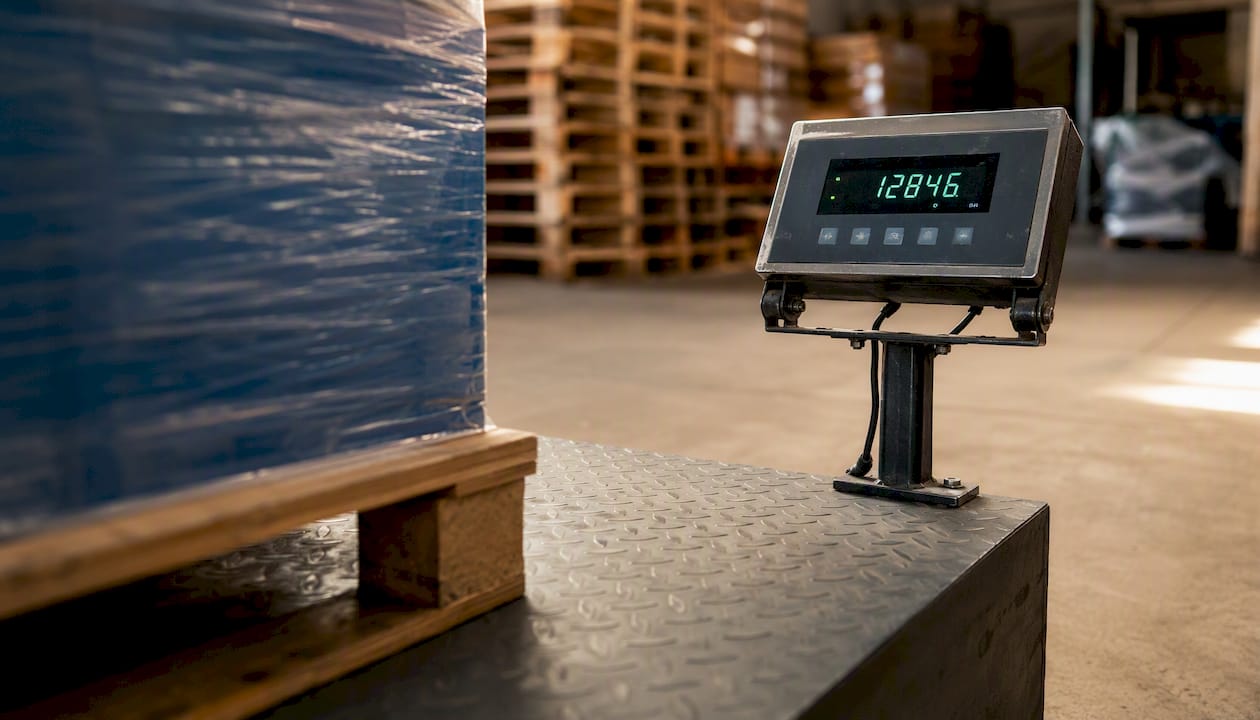
The core pricing inputs are weight, dimensional weight (volume divided by a density factor), distance or zone, and service tier. When a pallet is light but bulky, carriers often charge by dimensional weight rather than actual weight because it takes up more trailer space than its mass suggests. Freight-class and density work the same way in LTL pricing: a low-density load costs more per kilogram than a dense, compact one.
Primary pricing drivers:
- Gross weight: the combined weight of goods, pallet, and packaging
- Dimensional weight: length × width × height divided by a carrier-specific divisor
- Distance/zone: most UK carriers use postcode-based zone maps rather than exact mileage
- Service tier: economy (consolidated, slower) vs. standard vs. express (dedicated or priority)
- Pallet count: multi-pallet shipments often attract a per-pallet discount
Common surcharges to check on every quote:
- Fuel surcharge: typically 10–20% added to the base rate, and it shifts with diesel prices
- Residential delivery fee
- Tail-lift/liftgate fee (collection and/or delivery end)
- Redelivery fee (if the consignee misses the first attempt)
- Storage or demurrage (if the pallet sits at a depot beyond the free period)
- Oversize/overweight surcharge
- Hazardous goods handling fee
- Temperature-controlled handling
UK road freight volumes fluctuate with seasonal demand, which means lane pressure directly affects spot rates. Busy periods — pre-Christmas, post-bank-holiday surges — can push quotes noticeably higher than the annual average.
Pro Tip: Always ask for a fully itemized quote. A carrier that shows only a single line price is almost certainly bundling surcharges you can't verify. Base rate + each named surcharge = the only format worth comparing.
On declared value: carrier liability for lost or damaged pallets is usually capped at a low per-kilogram rate. If your goods are worth more than that cap, declared-value insurance is the gap-filler, not the carrier's standard liability.
How do you get an accurate instant quote for pallet delivery?
The fastest path to a usable price is an instant-quote tool or marketplace that asks the same fields carriers use internally. Gather this information before you start.
Step-by-step quote process:
- Measure and weigh the pallet — length, width, height (including pallet base), and gross weight.
- Enter pickup and delivery postcodes — zone-based pricing means postcodes matter more than a rough city name.
- Specify business or residential at both ends — this determines whether residential surcharges apply.
- Confirm tail-lift requirement — do either the collection or delivery addresses lack a loading dock or forklift?
- State pallet count — even if it's one, confirm it; multi-pallet rates differ.
- Declare the goods value — needed to select the right insurance/declared-value tier.
- Choose your service tier — economy, standard, or express, based on your deadline.
- Review the returned quote breakdown — base rate, fuel surcharge, any accessorials, and total.
Optional fields that can change the price:
- Hazardous classification (ADR/IMDG codes if applicable)
- Temperature control requirement (ambient, chilled, or frozen)
- Appointment delivery (a specific time window rather than an AM/PM slot)
- Inside delivery (beyond the kerbside or loading dock)
Pro Tip: When comparing quotes side by side, check that each one includes the same accessorials. A quote missing the tail-lift fee isn't cheaper — it's incomplete.
A typical instant-quote form returns a base rate and an itemized surcharge list within seconds. That breakdown is what you use to compare carriers on a like-for-like basis, not just the headline total.
What transit times should you expect for pallet delivery in the UK?
Economy, standard, and express mean different things in pallet freight than they do in parcel delivery. The gap between tiers is wider, and the cost difference is proportionally larger.
- Economy (consolidated): 2–5 business days. Your pallet moves on a shared trailer with other freight, routed through a hub network. Best for non-urgent, cost-sensitive shipments.
- Standard: 1–2 business days on most UK lanes. The most common choice for business-to-business shipments where a two-day window is acceptable.
- Express/next-day: next-business-day delivery where the lane and carrier network support it. Pricing can be significantly above standard rates, and availability depends on collection cutoff times.
Pickup windows matter as much as the service tier. Most carriers require collection bookings by early afternoon for same-day pickup. Miss that window and your "next-day" shipment becomes a two-day one. Depot network density also plays a role: high-volume lanes between major cities (London–Manchester, Birmingham–Leeds) tend to have more frequent departures and tighter transit windows than rural or remote postcodes.
Seasonal lane pressure — documented in industry capacity reports — can extend economy transit times during peak periods. If your shipment has a hard deadline, standard or express is the safer choice, even if the cost is higher.
What does pallet delivery insurance cost and how do claims work?
Declared-value insurance is usually modest. Expect to pay roughly £2–£5 per £1,000 of declared value, making it a small addition to the overall pallet shipping cost for most loads. For a £2,000 shipment, that's £4–£10 extra. Worth it for anything fragile or valuable.
What to expect from tracking:
- Basic tracking: collection confirmation and delivery notification (standard on most economy services)
- Milestone tracking: hub scans at key points in the network
- Real-time GPS: available on some express or dedicated services, often at a premium
If you need to file a claim:
- Note any visible damage at delivery and have the driver sign a damaged-goods note.
- Photograph the pallet, packaging, and goods immediately.
- Submit a written claim to the carrier within the timeframe stated in their terms (often 7 days for visible damage, longer for concealed damage).
- Provide the consignment note, invoice for goods value, and photographic evidence.
- Keep all original packaging until the claim is resolved.
Carrier liability limits vary. Many UK pallet carriers cap liability at £10–£20 per kilogram of gross weight, which for a 500 kg pallet means a maximum payout of £5,000–£10,000 regardless of actual goods value. If your load is worth more, declared-value cover is the only way to close that gap.
Pro Tip: Photograph every pallet before collection, including the strapping, wrapping, and any fragile labels. That evidence is the difference between a paid claim and a disputed one.
What can you actually send on a pallet, and what's restricted?
Certain goods are outright prohibited on standard pallet networks. Many more are restricted, meaning they require extra paperwork, specialist carriers, or both — and that adds cost and lead time.
Prohibited items (standard pallet networks):
- Illegal goods of any kind
- Unpackaged or loose hazardous materials without proper ADR documentation
- Live animals
- Human remains
- Goods that exceed the carrier's maximum weight or dimension limits
Restricted categories and typical cost/requirement impacts:
- Lithium batteries (standalone): many carriers refuse them or require ADR-compliant packaging and documentation, adding £20–£50+ per shipment
- Hazardous chemicals (flammable, corrosive, toxic): ADR classification required, specialist carrier often needed, significant cost premium
- Foodstuffs (perishable): temperature-controlled service required, adds £30–£80+ depending on lane and duration
- Alcohol and tobacco: some carriers require additional declarations; customs documentation for cross-border
- High-value electronics: may exceed standard liability caps, requiring declared-value cover
For cross-border or hazardous shipments, gov.uk provides official guidance on documentation requirements. Never rely solely on a carrier's marketing copy for compliance — check the primary source.
How can you reduce your pallet delivery costs?
The biggest savings come from decisions made before you book, not from haggling after the fact.
High-impact cost reduction tactics:
- Batch pallets where possible. Multi-pallet shipments attract per-pallet discounts on most networks. Two pallets on one booking almost always costs less than two separate single-pallet bookings.
- Use economy service for non-urgent freight. The price gap between economy and standard can be 20–40% on longer lanes.
- Deliver to a business address with a dock. Eliminating the residential surcharge and tail-lift fee can save £25–£55 per shipment.
- Book off-peak. Avoid the pre-Christmas and post-bank-holiday surges documented in freight capacity reports. Mid-week bookings on quieter lanes often return lower spot rates.
- Use exchange pallets or a pallet pooling scheme. Returning pallets through a pooling network (rather than buying new each time) reduces per-shipment material cost.
Packaging tips that directly affect price:
- Maximize stackability: a compact, stable pallet with a lower height-to-weight ratio often falls into a cheaper density band.
- Wrap tightly and label clearly: poorly wrapped pallets get refused or re-handled at depots, triggering rehandling fees.
- Keep the footprint within the pallet edge: overhang triggers oversize surcharges.
Pre-booking checklist:
- Confirmed gross weight (not estimated)
- Accurate dimensions including pallet base height
- Business vs. residential confirmed at both ends
- Tail-lift requirement confirmed
- Declared value decided
- Service tier matched to actual deadline
Packaging and stackability choices can materially change which density band a carrier assigns your load. Getting that right before booking is one of the easiest ways to avoid an unexpected upcharge.
How does a transport marketplace make pallet pricing faster and more comparable?
A marketplace that collects standardized shipment inputs returns multiple comparable, all-in quotes faster than contacting individual carriers. That's the core value: one set of inputs, multiple verified prices, side by side.

Swiftroute-courier works exactly this way. You enter your pallet details once — dimensions, weight, postcodes, service requirements — and the platform returns quotes from approved carriers with base rates and surcharges broken out separately. You can compare on price, transit time, carrier rating, and insurance options without chasing individual carrier sales teams.
What the platform gives you:
- Standardized instant-quote forms that match the fields carriers actually use for pricing
- Itemized breakdowns separating base rate from fuel surcharge, residential fees, and tail-lift charges
- Carrier ratings and delivery time estimates alongside each price
- A booking dashboard to manage requests, confirmations, and payments in one place
- Access to regional quote pages for area-specific pricing, including high-density lanes like London and Manchester where carrier competition tends to keep rates sharper
When evaluating any pallet delivery option, the key criteria are:
- All-in price transparency (base + every surcharge named)
- Pallet size and weight limits the carrier will accept
- Transit time and service-level guarantee
- Collection type (kerbside, business dock, residential) and equipment available (tail-lift, forklift)
- Insurance and declared-value options
- Booking method (instant online vs. bespoke quotation with a sales rep)
Carriers on Swiftroute-courier go through a verification process before accessing job listings. That matters for claims: a verified, rated carrier has more accountability than an anonymous spot-market pickup.
Pro Tip: Use regional quote pages for your specific origin city. High-density lanes — Manchester to London, Birmingham to Leeds — often return more competitive rates because more carriers are competing for the same freight.
When does a marketplace-first approach actually make sense?
For single to low double-digit pallet counts, or for shippers moving freight across mixed lanes without a fixed carrier contract, a marketplace is usually the fastest way to compare all-in prices. You're not locked into one carrier's rate card, and you see the full surcharge picture before committing.
The exception is volume. If you're moving 50+ pallets a week on consistent lanes, a direct carrier relationship or a tendered contract will almost always beat spot-market rates. At that scale, the time investment in negotiating a dedicated rate card pays off. Similarly, full truckload (FTL) freight is better served by dedicated FTL bidding platforms or direct carrier negotiation — a pallet marketplace is optimized for LTL and single-pallet shipments, not full trailer loads.
For everyone else — small retailers, tradespeople, growing businesses shipping occasional pallets — the marketplace model removes the friction that makes freight feel complicated. One form, multiple quotes, verified carriers, and a clear breakdown of what you're actually paying for.
Swiftroute-courier: compare UK pallet quotes without the back-and-forth
Calling three carriers for quotes, waiting for callbacks, and then realizing each quote uses different surcharge assumptions is a frustrating way to spend an afternoon. Swiftroute-courier cuts that process to minutes.
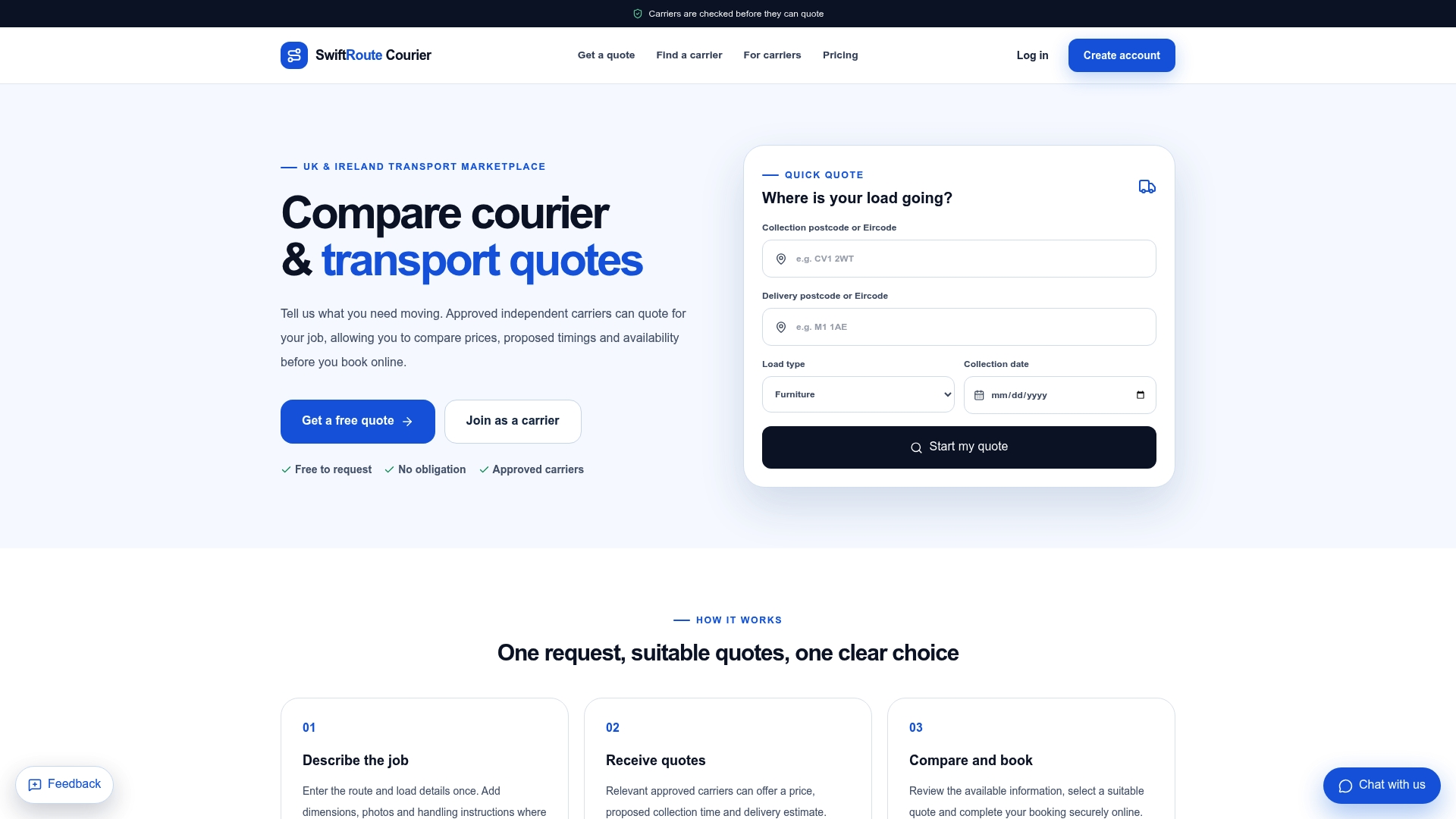
Enter your pallet details once on Swiftroute-courier and receive multiple quotes from approved UK carriers, each with an itemized price breakdown. You can filter by transit time, compare insurance options, and book securely through the dashboard without speaking to a single sales rep. No monthly fees, no obligation during the current MVP period.
What you get with each quote:
- All-in price with surcharges named separately
- Carrier rating and delivery time estimate
- Insurance and declared-value options
- Secure online booking and payment
Get your instant pallet quote now and have a real, comparable price in under two minutes.
Sources
- Domestic road freight statistics, United Kingdom: 2024
- How Much Does a Pallet Delivery Cost in the UK?
- Pallet Delivery Costs: A Complete Price Guide for 2026
- How Much Does It Cost to Have a Pallet Delivered?
- Pallet Delivery Explained: Cost, Process & Rules - Jack Cooper
For live, carrier-specific quotes on your actual shipment, Swiftroute-courier is the fastest starting point.