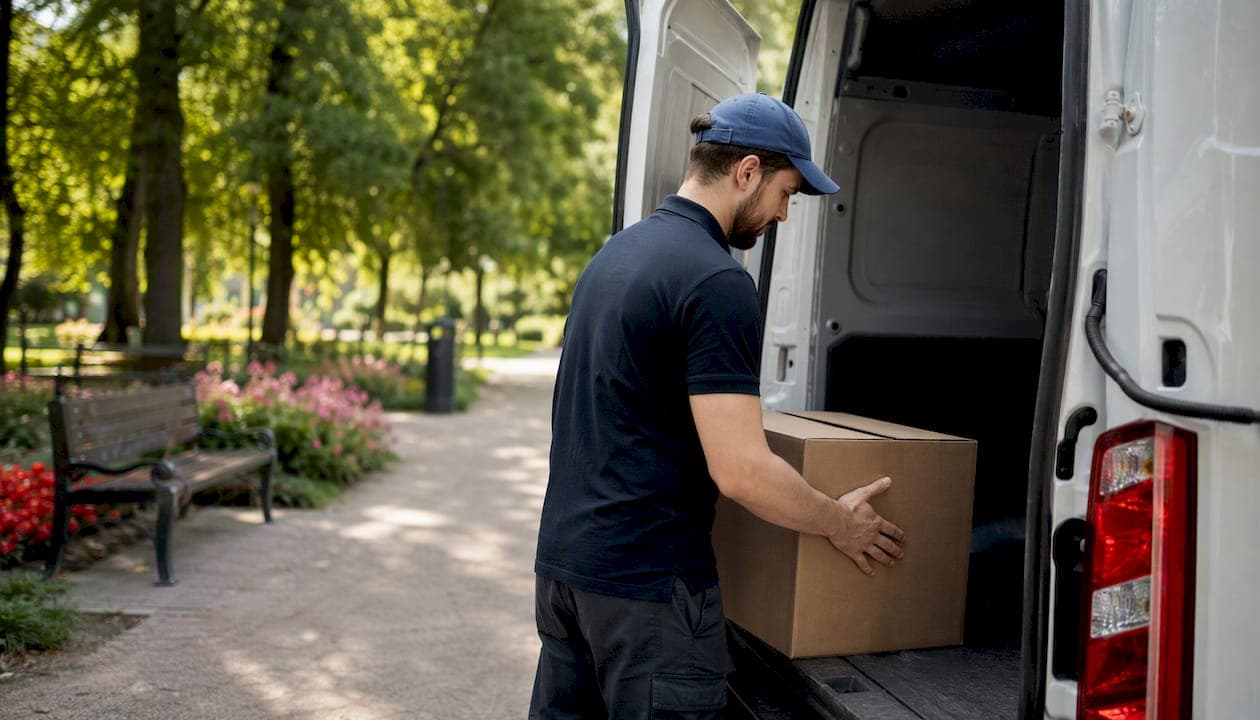
Same day courier cost in the UK typically runs from a low tens of pounds for short city runs, moderate amounts for regional jobs, and several hundreds of pounds for cross-country routes, depending on distance, vehicle type, and how urgently you need the pickup. If you're deciding right now, the fastest move is to get an instant quote and compare multiple carriers in one place.
Quick cost anchors:
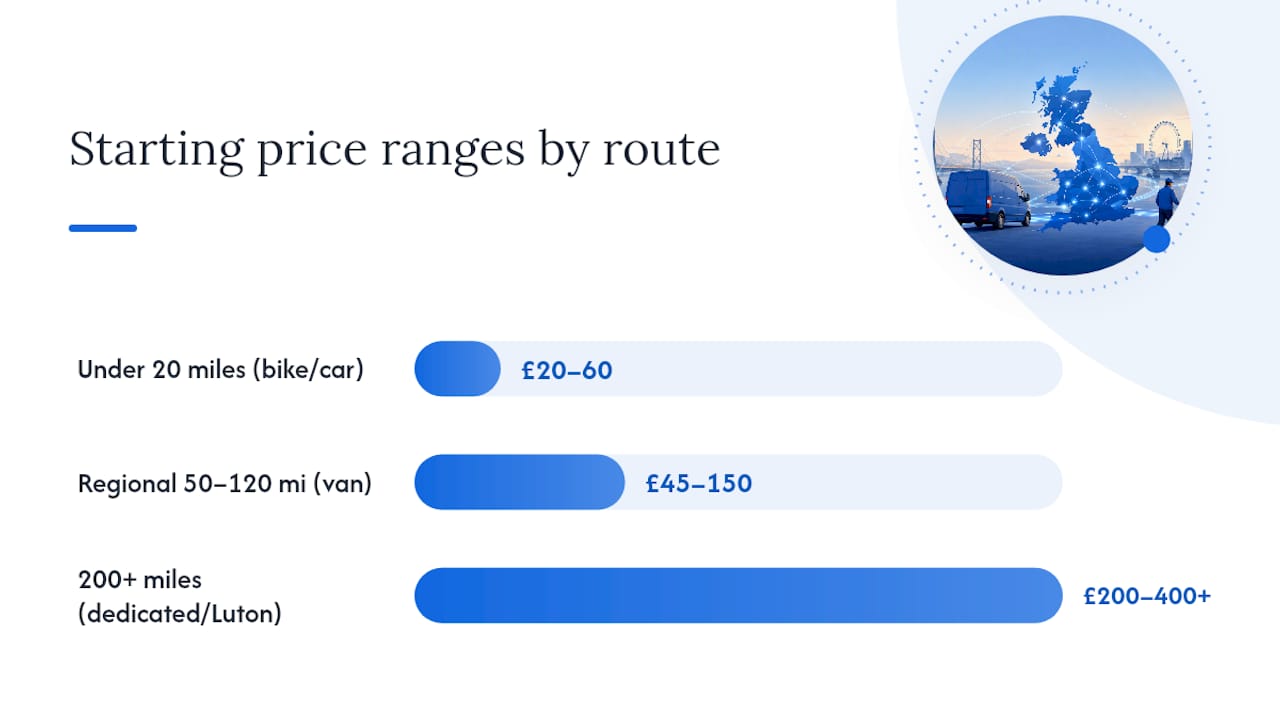
- Local city run (under 20 miles): starting around £20, typically a bike or car
- Regional run (50–120 miles): moderate ranges, usually a small van
- Long-haul (150+ miles): higher costs expected, dedicated van or Luton
Same-day is worth the premium when the cost of delay outweighs the delivery fee. Legal documents with a court deadline, a critical machine part that's holding up a production line, or a medical sample with a strict lab window — these are the jobs where paying significantly more than next-day makes complete financial sense.
Pro Tip: Before you call anyone, write down your full pickup and drop-off postcodes, the parcel's dimensions and weight, your hard deadline, and the item's declared value. Carriers who get vague requests quote high to cover uncertainty.
Key Takeaways
Same-day courier cost in the UK is driven primarily by distance, vehicle type, and urgency, with local runs starting around £20 and cross-country dedicated jobs reaching £400 or more.
| Point | Details |
|---|---|
| Local runs start around £20 | City runs under 20 miles using a bike or car typically cost £20–£60 ex-VAT. |
| Regional and cross-country costs | Regional jobs (50–120 miles) run £45–£150; cross-country routes reach £200–£400+. |
| Urgency adds a real premium | On-demand ASAP services cost significantly more than scheduled same-day window slots. |
| Prepare five details before quoting | Have postcodes, dimensions, weight, deadline, and declared value ready for a firm price. |
| Swiftroute-courier compares carriers | One form submission returns multiple approved carrier quotes with prices, ratings, and timelines. |
Table of Contents
- What actually determines same day courier cost?
- Worked sample prices for common UK journeys
- Which same-day service type fits your job?
- How to get an accurate same-day quote fast
- Practical ways to reduce same-day courier cost
- Insurance, declared value, and what compensation to expect
- What to expect from the booking and delivery timeline
- What same-day couriers usually won't transport
- When same-day is the right call and when it isn't
- Swiftroute-courier puts multiple same-day quotes in front of you at once
- Sources
What actually determines same day courier cost?
Distance is the single biggest lever in any same-day quote. Most UK carriers price on a base collection fee plus a per-mile rate, and for dedicated runs, the driver often returns empty, so you're effectively paying for both legs of the journey on longer routes. A 200-mile job doesn't cost twice a 100-mile job — it often costs more, because the return mileage is dead time for the driver.
Vehicle type shifts the base rate significantly:
- Bicycle or cargo bike: lowest cost, suited to small parcels in dense urban areas
- Car or small hatchback: good for documents, small boxes, up to around 20 kg
- Small van (Transit-size): the workhorse for most business deliveries
- Luton or tail-lift van: required for pallets, heavy equipment, or bulky furniture — commands the highest per-mile rate
Urgency and service level are where prices diverge most sharply. On-demand and ASAP services consistently command the highest premiums compared to scheduled same-day windows. Booking a 9 AM slot at 8:30 AM costs more than booking a 3 PM slot at 9 AM — the carrier has less time to optimize their route.
Weight, dimensions, and handling requirements add cost in two ways: they determine which vehicle is needed, and they can trigger specialist handling fees. Fragile items, temperature-controlled consignments, and anything requiring tail-lift access all carry surcharges.
Additional cost factors to expect:
- Out-of-hours, weekend, and bank-holiday surcharges (often 20–40% above standard rates)
- Congestion zone charges (London ULEZ and Congestion Charge pass-through)
- Waiting time fees, typically billed in 15-minute increments after a free window
- Fuel surcharges, which fluctuate with diesel prices and vary by carrier
- Declared value/insurance uplift for high-value goods
Pricing models vary by carrier. Flat-fee pricing works for short, predictable city runs. Per-mile pricing is standard for regional and national dedicated runs. Hourly rates appear mainly for multi-drop or courier-on-call arrangements where the driver stays on site. Account pricing, available to regular business customers, usually blends a negotiated per-mile rate with capped surcharges.
Pro Tip: *Ask for an all-in quote that itemizes fuel surcharge, waiting time allowance, congestion charges, and VAT separately.
Worked sample prices for common UK journeys
These ranges reflect practitioner-sourced starting prices for typical UK routes. All figures are approximate and exclude VAT unless stated. Your actual quote depends on exact postcodes, parcel weight, timing, and the carrier's current availability.
| Route | Distance | Vehicle | Estimated Price (ex-VAT) |
|---|---|---|---|
| City center to city center (e.g., London zones) | Under 20 miles | Bike or car | Starting around £20 |
| Intra-city with multiple drops (e.g., Manchester) | Under 30 miles | Small van | Moderate range |
| Regional run (e.g., Birmingham to Leeds) | 90 miles | Small van | Moderate range |
| Cross-country (e.g., London to Manchester) | 200 miles | Dedicated van | Higher range |
| Long-haul (e.g., London to Edinburgh) | 400+ miles | Luton or large van | Higher price expected |
Three worked scenarios:
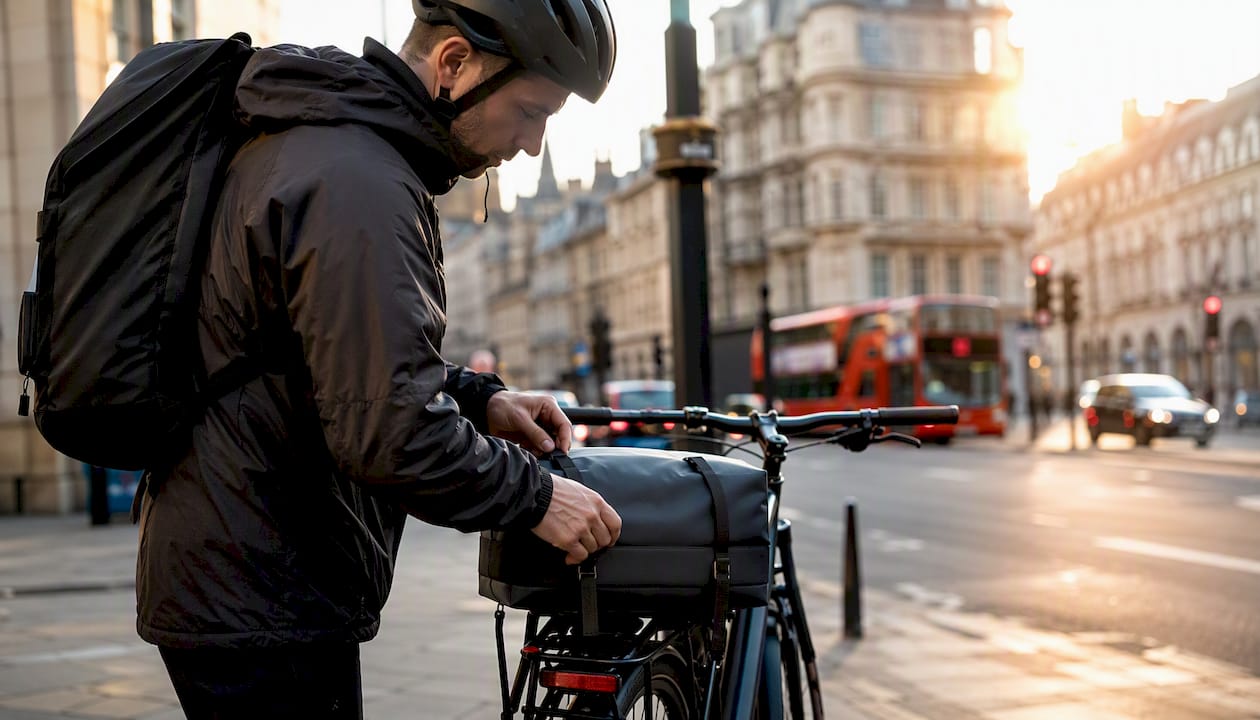
Legal documents, central London. A solicitor needs signed contracts delivered across the City within 90 minutes. A bike courier handles it for around £25–£40. No van needed, no mileage penalty, and the bike beats traffic.
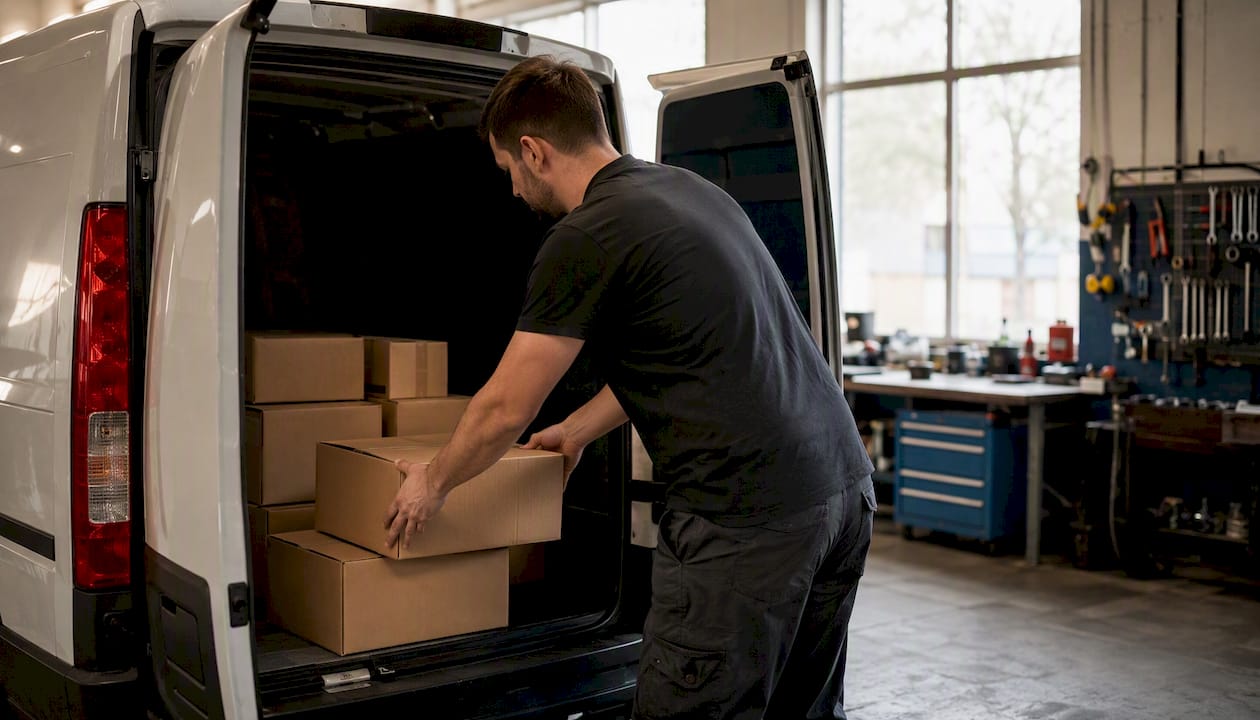
Urgent car part, Birmingham to Leeds. A garage needs a gearbox delivered same day to keep a customer's car on schedule. A small van, roughly 90 miles, typically prices at £100–£150 depending on pickup time and whether the driver can return with another load.
Medical sample, timed slot, Bristol to London. Temperature-controlled consignments with a strict lab arrival window require an accredited carrier and specialist packaging. Expect £150–£250 for this type of run, with the timed-slot premium and handling requirements built in.
Always confirm whether a quoted price is ex-VAT or inclusive, particularly when comparing quotes from different carriers.
Which same-day service type fits your job?
Not every same-day job needs the fastest option. Matching the service to the actual requirement is where most businesses save money without taking on risk.
| Service Type | Best For | Typical Price Impact |
|---|---|---|
| Direct/dedicated | Single consignment, time-critical, no sharing | Highest — driver goes straight there |
| Express (60–120 min pickup) | Urgent but not ASAP; small parcels | High premium over scheduled |
| Scheduled same-day (window) | Flexible deadline within the day | 15–30% cheaper than on-demand |
| Timed/slot delivery | Recipient must be present; medical, legal | Moderate premium for precision |
| Multi-drop | Several stops on one route | Lower cost per stop; higher total |
| Bike courier | Small parcels, dense urban areas | Cheapest for city runs |
| Pallet/Luton | Heavy, bulky, or pallet-sized freight | Highest base rate; tail-lift fees apply |
Choosing the right option:
- Use a bike courier for anything under 10 kg in a city center. It's faster in traffic and cheaper than any van option for short distances.
- Choose scheduled same-day when your deadline is "by 5 PM" rather than "within the hour." The price difference is real, and the delivery outcome is identical.
- Timed slots make sense for medical samples, pharmacy deliveries, or any consignment where the recipient has a narrow availability window.
- Multi-drop is the right call for businesses sending to several addresses in the same area. Efficient multi-stop planning can cut cost per delivery by a meaningful margin compared to booking each run separately.
- Reserve dedicated/direct for genuinely time-critical single consignments where any delay has a measurable cost.
Royal Mail Sameday offers a nationwide option with online quoting for time-critical deliveries, which is worth checking for standard parcel sizes alongside marketplace quotes.
How to get an accurate same-day quote fast
Vague requests produce provisional, padded quotes. Carriers who don't know your parcel's weight or your hard deadline will add a buffer. A firm quote requires full pickup and delivery postcodes, exact dimensions and weight, and a clear deadline — without those, you're getting a ballpark, not a price.
Five things to have ready before you request a quote:
- Full pickup and delivery postcodes
- Parcel dimensions (length, width, height in cm) and weight in kg
- Vehicle type needed, or the parcel's size if you're unsure
- Your hard deadline or preferred delivery window
- Declared value of the goods for insurance purposes
Booking flow options:
Instant online quote. Enter your postcodes, parcel details, and deadline into a quoting platform. Major UK same-day platforms generate on-screen prices immediately after you enter pickup and drop details, letting you compare vehicle options and service speeds without a phone call.
Phone quote. Faster for complex or specialist jobs (temperature control, tail-lift, multi-drop). A carrier's operations team can advise on vehicle type and flag access restrictions you might not have considered.
Account pricing. If you book same-day regularly, a negotiated account rate with a carrier or marketplace typically beats spot pricing. Volume commitments unlock per-mile rate reductions and capped surcharges.
On round-trips and multi-stop: ask the carrier explicitly whether their quote includes return mileage. On dedicated runs, it almost always does — but the way it's presented varies. A transparent breakdown shows base fee, mileage rate, return miles (if applicable), and any surcharges as separate line items.
Swiftroute-courier aggregates quotes from multiple approved carriers in one form submission, cutting the back-and-forth of calling carriers individually. You see price, vehicle type, and carrier rating side by side.
Pro Tip: When comparing quotes, check whether waiting time is included. Some carriers give 15 minutes free; others start the clock on arrival. On a busy loading bay, that difference can add £20–£40 to the final invoice.
Practical ways to reduce same-day courier cost
The biggest savings come from timing and consolidation, not from haggling on the headline rate.
- Flex the delivery window. If "by 5 PM" works instead of "within 90 minutes," choose a scheduled same-day slot. On-demand services are consistently more expensive than scheduled same-day windows, and the delivery outcome is often identical.
- Consolidate shipments. Sending three parcels to addresses in the same city? A multi-drop run on one vehicle costs less per stop than three separate bookings.
- Right-size the vehicle. A small parcel going 15 miles in central London doesn't need a Transit van. A bike or car cuts the base rate and avoids congestion charge pass-throughs.
- Pre-pack and be ready. Waiting time fees start after the driver's free window, usually 15 minutes. Having everything packed, labeled, and at the door eliminates that risk.
- Schedule rather than react. If you know a part will be needed tomorrow, booking tonight's scheduled same-day slot is cheaper than an ASAP request at 8 AM.
- Negotiate account pricing. Businesses sending more than a handful of same-day jobs per month should ask for account rates. Volume commitments typically unlock per-mile discounts and fuel-surcharge caps.
Pro Tip: Ask carriers whether they have a return load going your direction. On long-haul dedicated runs, a carrier who can pick up a return job will sometimes reduce your rate — it's worth asking directly.
Insurance, declared value, and what compensation to expect
Standard carrier liability in the UK is limited. Most same-day couriers include a basic liability cover, but the limit per kilogram or per consignment is often far below the actual value of the goods. For anything worth more than a few hundred pounds, relying on standard cover is a risk.
Declared value is the figure you tell the carrier the goods are worth. It affects two things: the insurance premium added to your quote, and the maximum payout if something goes wrong. Carriers require you to declare value accurately — understating it to reduce the premium can void a claim.
What to keep for any potential claim:
- Photos of the item before handover, showing condition
- Original purchase receipts or a valuation document
- Signed proof of collection (chain-of-custody signature)
- Delivery confirmation or proof of delivery with timestamp
- Any damage photos taken immediately on receipt
Claim resolution timelines vary. Minor damage claims on documented consignments typically resolve within a few weeks. Disputed or high-value claims can take longer, particularly if liability is contested.
When to buy additional insurance: if the item's replacement value exceeds the carrier's declared-value cap, or if it's irreplaceable (artwork, bespoke equipment), arrange a separate transit insurance policy rather than relying on the carrier's built-in cover. The carrier's liability is a floor, not a ceiling — additional cover fills the gap.
What to expect from the booking and delivery timeline
From the moment you confirm a booking, the clock runs on a predictable sequence. Knowing the stages helps you set realistic expectations with whoever is waiting at the other end.
Typical ASAP/on-demand timeline:
- Booking confirmed: driver allocated within 5–15 minutes
- Pickup window: 20–60 minutes from booking confirmation
- Transit: direct to destination, no intermediate stops
- Proof of delivery: digital signature or photo, usually within minutes of drop-off
Scheduled same-day timeline:
- Booking confirmed: driver allocated closer to the pickup window
- Pickup window: as agreed at booking (e.g., 2 PM–3 PM)
- Transit: direct or optimized route depending on service type
- Delivery: within the agreed window
Common delay causes include traffic on motorway routes, access restrictions at the delivery address (no loading bay, security sign-in), and waiting time at pickup if goods aren't ready. Providing accurate access information at booking — floor number, gate code, contact name — reduces these delays significantly.
When to switch service type mid-day: if your ASAP booking is running late due to traffic and the recipient has a hard close time, contact the carrier immediately. Most platforms allow you to escalate or reroute, but the window to act is narrow.
What same-day couriers usually won't transport
Knowing what's off the table before you book saves the cost and delay of a refused consignment.
Commonly prohibited:
- Explosives, firearms, and ammunition
- Illegal substances
- Counterfeit goods
- Unpackaged liquids that could leak
Frequently restricted (requires accreditation, documentation, or specialist carrier):
- Hazardous materials (IMDG/ADR-classified goods) — carriers must hold the appropriate ADR certification
- Live animals — require welfare certification and specialist handling
- Controlled medicines — need a licensed carrier and documented chain of custody
- Medical samples — often require temperature control and accredited handling
- Lithium batteries in large quantities — subject to transport regulations
For medical samples and controlled medicines, the carrier must hold the relevant accreditation, and the cost reflects that. Expect to pay a premium over standard same-day rates, and confirm accreditation before booking rather than after.
Before booking a restricted item: check the carrier's terms of carriage explicitly. Incorrect declarations can result in the consignment being refused mid-route, with the shipper liable for any resulting costs. Some carriers charge a handling fee for refused loads even when the refusal is at the depot.
When same-day is the right call and when it isn't
The conventional wisdom on same-day delivery is that it's a premium you pay when you're in a bind. That framing misses something. For certain businesses, same-day isn't an emergency option — it's a product feature.
A repair shop that promises "back by end of day" is selling same-day courier cost as part of its service margin. A legal firm that guarantees document delivery before court close is doing the same. In those cases, the courier cost belongs in the pricing model, not the emergency budget.
Where same-day genuinely doesn't make sense: low-value items where the delivery cost approaches or exceeds the item's value, non-urgent stock replenishment where next-day or economy freight works fine, and situations where the recipient isn't available to receive the delivery anyway. Paying for speed when the bottleneck is at the other end is money wasted.
The decision framework is straightforward. Ask what the cost of delay actually is — in lost revenue, customer trust, or operational downtime. If that number exceeds the same-day premium, book it. If it doesn't, schedule next-day and redirect the saving.
One thing most guides understate: the value of having a pre-negotiated account with a same-day carrier or marketplace. Businesses that react to same-day needs ad hoc always pay spot rates. Those who build it into their logistics model pay less per job and get priority allocation when demand spikes.
Swiftroute-courier puts multiple same-day quotes in front of you at once
Calling three carriers to get three quotes takes 20 minutes you probably don't have when a delivery is urgent. Swiftroute-courier cuts that to a single form: enter your postcodes, parcel details, and deadline, and you get quotes from multiple approved UK carriers side by side, with pricing, vehicle type, carrier ratings, and delivery timelines visible before you commit.
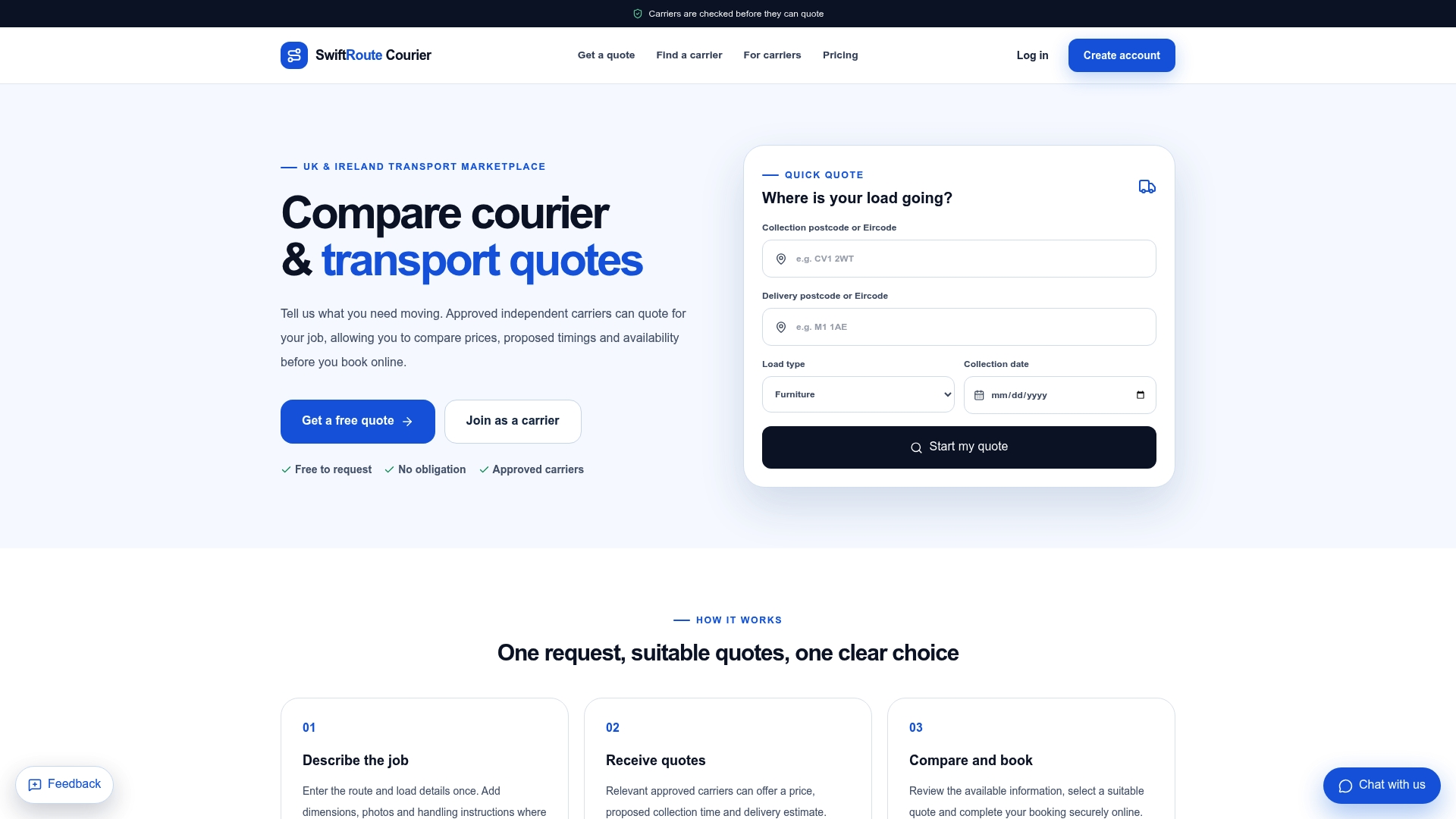
There's no monthly fee to use the platform, and the quote comparison is free. For businesses with repeat same-day needs, the dashboard tracks all your requests and bookings in one place, which makes account management and cost tracking straightforward. For individuals, it removes the guesswork of knowing which carrier covers your route and at what price.
Compare same-day carrier quotes now, or browse UK transport quotes by area to see regional pricing and coverage before you submit a request.
Sources
Use these to cross-check quotes or read into specific carrier terms and service structures before you book.
- How Much Does a Same Day Courier Cost in the UK?
- How Much Does Same‑Day Courier Delivery Actually Cost? - Urgent Forwarding
- How Much Do Local Couriers Charge in the UK? A 2026 Price Guide
- Same Day Couriers Nationwide | Gophr